
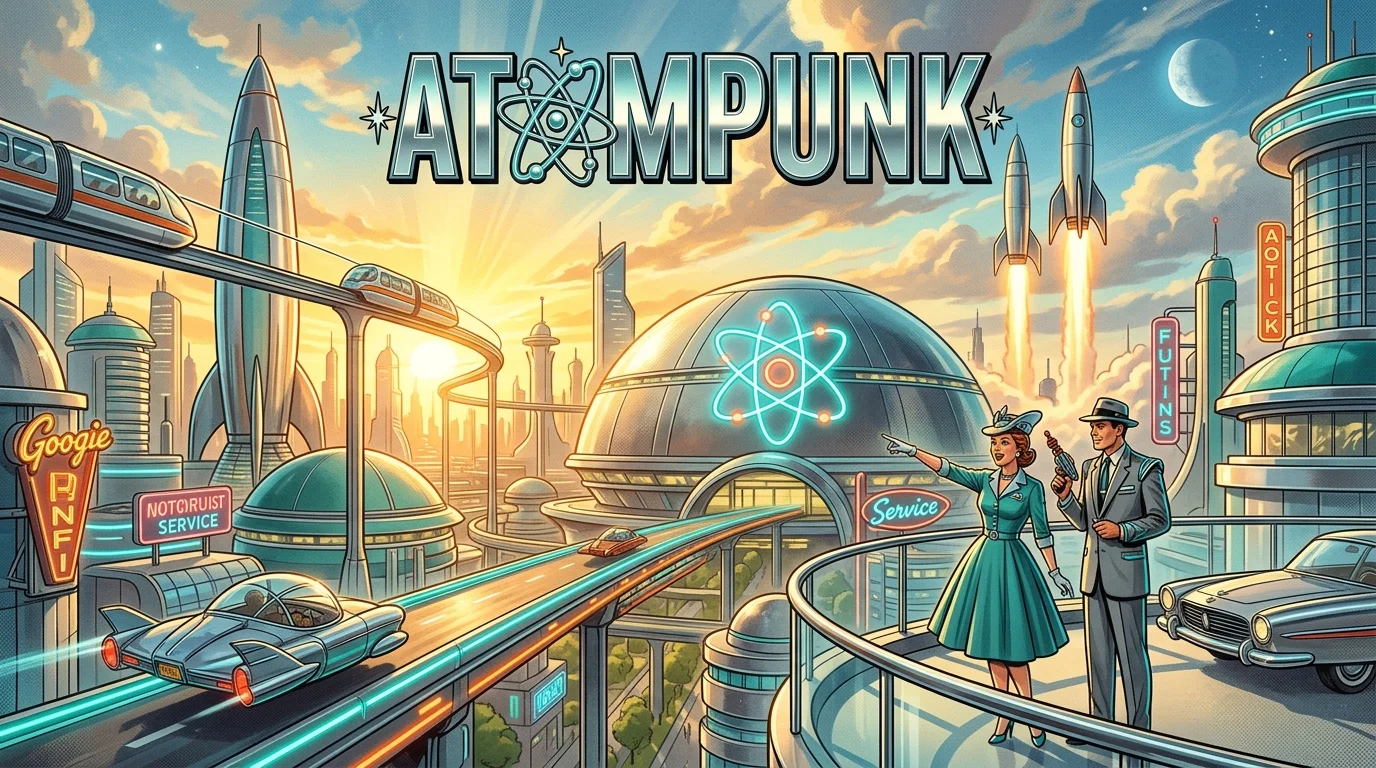
Atompunk is a fascinating retrofuturistic genre that captures the hopes, fears, and technological dreams of the Atomic Age. Inspired by the period roughly spanning the late 1940s through the 1960s, atompunk imagines futures shaped by nuclear power, space exploration, advanced scientific discoveries, and optimistic visions of tomorrow.
Unlike many modern science fiction genres that focus on digital technology and artificial intelligence, atompunk reflects a time when people believed atomic energy could revolutionize everyday life. Sleek rockets, flying cars, robot assistants, moon colonies, and futuristic suburban communities became symbols of a brighter future waiting just around the corner.
Today, atompunk remains popular in literature, film, television, gaming, and visual art because it combines nostalgic mid-century aesthetics with imaginative technological possibilities. This blend of history and speculation creates a unique style that continues to inspire creators and audiences alike.
What Is This Retro-Futuristic Genre?
Atompunk is a retrofuturistic subgenre inspired by the cultural, scientific, and design influences of the Atomic Age, particularly from the end of World War II through the Space Race era.
The genre explores futures imagined during a time when nuclear technology, scientific advancement, and space exploration dominated public imagination. Rather than depicting the future as we know it today, atompunk presents the future that people in the 1950s and 1960s believed might exist.
These fictional worlds often feature:
- Atomic-powered vehicles
- Personal robots
- Space travel as routine transportation
- Futuristic household technology
- Moon and Mars colonies
- Advanced scientific inventions
- Mid-century modern architecture
- Retro-inspired fashion and design
The result is a world that feels both nostalgic and futuristic at the same time.
The Origins of the Atomic Age Vision
The Atomic Age Influence
The roots of this genre lie in the historical period following World War II.
The development of nuclear technology transformed global politics, science, and culture. While nuclear weapons created fear and uncertainty, atomic energy also inspired optimism about the future.
Scientists, governments, and media outlets frequently promoted the idea that nuclear power could solve many of humanity’s challenges. People imagined atomic-powered homes, cars, aircraft, and entire cities.
This excitement became a major influence on science fiction and popular culture.
The Space Race Connection
The Space Race between the United States and the Soviet Union further shaped atompunk aesthetics.
As rockets became symbols of technological achievement, the public developed a fascination with space exploration. Magazines, advertisements, films, and television programs depicted a future filled with interplanetary travel and advanced space technology.
Many of the visual elements associated with the genre emerged directly from these cultural influences.
A Retrofuturistic Genre
Like steampunk and dieselpunk, atompunk belongs to the broader retrofuturism movement.
Retrofuturism explores how people in the past imagined the future.
This retro-futuristic style specifically focuses on the future visions of the Atomic Age, creating alternate realities where many of those optimistic predictions became reality.
Defining Characteristics of the Genre
Atomic-Powered Technology
Nuclear energy sits at the center of many atompunk worlds.
Characters may use atomic-powered:
- Cars
- Aircraft
- Trains
- Household appliances
- Industrial machinery
- Spacecraft
While real-world nuclear technology developed differently than many early predictions suggested, atompunk explores what might have happened if atomic power became a common part of daily life.
Space Exploration
Space travel is often portrayed as routine and accessible.
Rather than being limited to astronauts, ordinary citizens may travel between planets much like people use commercial airlines today.
Common settings include:
- Lunar cities
- Mars colonies
- Orbital stations
- Deep-space exploration missions
- Interplanetary transportation systems
This emphasis reflects the optimism of the Space Race era.
Scientific Optimism
One defining trait of the genre is its belief in progress.
Many stories assume that science and technology can solve major societal problems.
While modern science fiction sometimes emphasizes technological risks, atompunk often celebrates innovation, discovery, and exploration.
This hopeful outlook distinguishes it from darker futuristic genres.
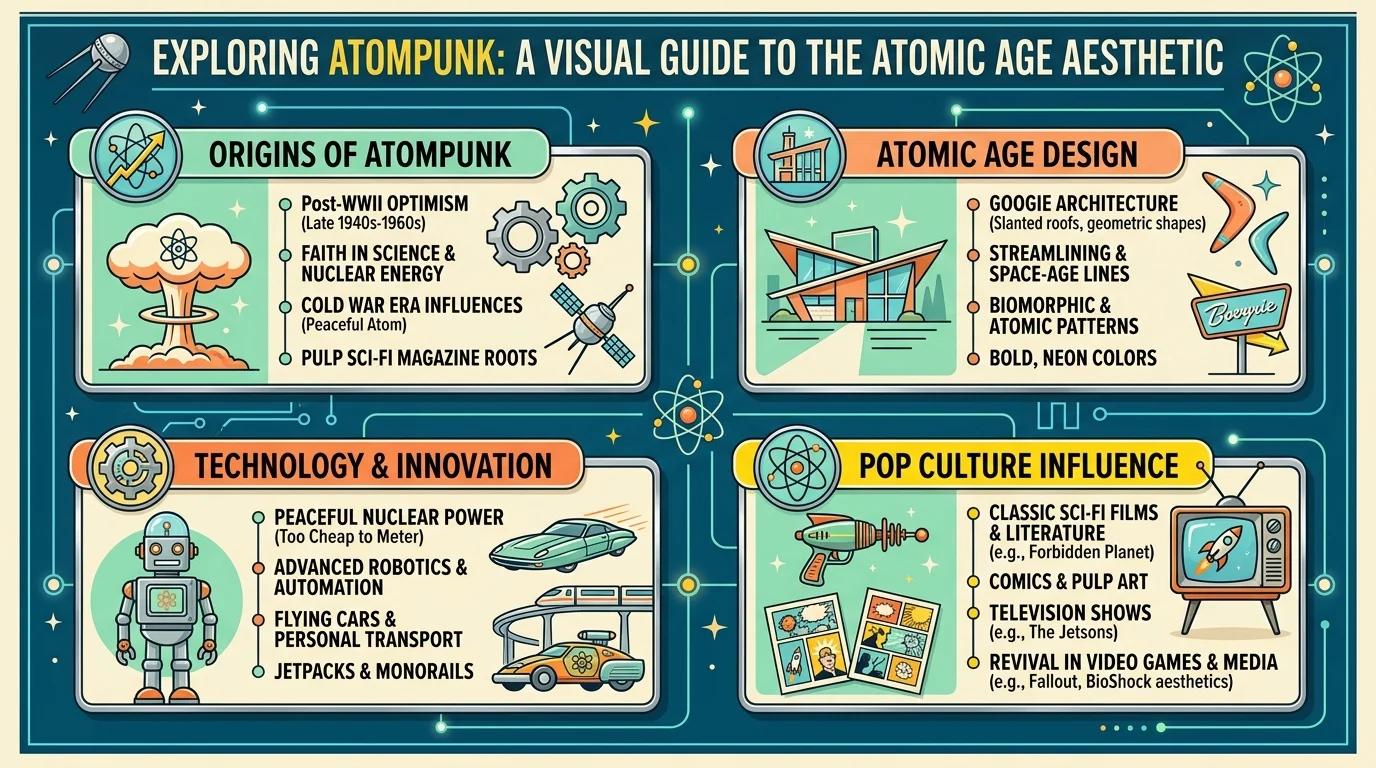
The Visual Style of the Atomic Age Future
Mid-Century Modern Design
Atompunk aesthetics draw heavily from mid-century modern architecture and industrial design.
Buildings often feature:
- Clean geometric lines
- Curved structures
- Large glass surfaces
- Bright colors
- Futuristic silhouettes
These designs create a world that feels both historical and futuristic.
Atomic Symbols
Atomic imagery frequently appears throughout atompunk art and design.
Common visual motifs include:
- Electron orbit patterns
- Starbursts
- Rocket ships
- Atomic logos
- Geometric shapes
- Scientific laboratory equipment
These symbols reinforce the genre’s connection to scientific advancement and nuclear technology.
Retro Fashion
Fashion in atompunk settings often reflects 1950s and 1960s trends while incorporating futuristic elements.
Characters may wear:
- Space-age uniforms
- Metallic fabrics
- Streamlined suits
- Futuristic dresses
- Visor-style accessories
- Experimental footwear
The combination creates a distinctive retro-futuristic appearance.
How It Compares to Other Punk Genres
Comparison With Steampunk
Steampunk focuses on Victorian-era technology powered by steam engines.
Atompunk focuses on the Atomic Age and nuclear-powered futures.
While steampunk emphasizes brass machinery and nineteenth-century aesthetics, atompunk embraces rockets, modern materials, and mid-century design.
Comparison With Dieselpunk
Dieselpunk draws inspiration from the 1920s through the 1950s and often highlights industrial machinery, aviation, and wartime technology.
Atompunk looks forward to the future imagined during the Atomic Age.
The visual styles overlap occasionally, but atompunk generally appears cleaner, more optimistic, and more focused on space exploration.
Comparison With Cyberpunk
Cyberpunk explores high-tech societies often characterized by corporate control, digital networks, and social inequality.
Atompunk presents a much earlier vision of the future where atomic science rather than digital technology drives innovation.
The tone is often significantly more optimistic than cyberpunk.
Common Themes in These Stories
Humanity’s Future
Many atompunk stories explore humanity’s potential.
Characters often face questions about:
- Scientific responsibility
- Exploration of new worlds
- Technological progress
- Human adaptation to change
The future is generally portrayed as a place of opportunity and discovery.
The Promise and Danger of Nuclear Power
Although optimism is common, atompunk does not always ignore the risks associated with atomic technology.
Some stories examine:
- Nuclear accidents
- Political tensions
- Ethical concerns
- Environmental consequences
This balance between hope and caution adds depth to the genre.
Space Colonization
The dream of living beyond Earth remains a recurring theme.
Writers frequently imagine thriving settlements on the Moon, Mars, and distant planets.
These stories reflect the excitement that surrounded space exploration during the mid-twentieth century.
Famous Examples of the Genre
Fallout Series
The Fallout video game franchise is often considered one of the most recognizable examples of atompunk.
The series combines Atomic Age aesthetics with post-apocalyptic storytelling. Retro-futuristic technology, nuclear power, and 1950s-inspired design dominate its world.
The Jetsons
The classic animated television series presents a highly optimistic vision of the future featuring flying cars, robot assistants, and futuristic cities.
Many elements closely align with atompunk themes.
Tomorrowland
Both the Disney attraction and related media showcase futuristic designs inspired by Atomic Age predictions about technology and exploration.
Forbidden Planet
Released in 1956, this science fiction film remains an influential example of Atomic Age futurism and space exploration themes.
Why This Genre Remains Popular
Nostalgia for Optimism
Modern audiences often find atompunk appealing because it reflects a period when many people believed technology would create a better future.
This sense of optimism offers a refreshing contrast to darker science fiction narratives.
Unique Visual Identity
The genre’s combination of retro design and futuristic concepts creates instantly recognizable imagery.
Rocket ships, atomic symbols, and mid-century architecture continue to inspire artists and designers.
Endless Creative Possibilities
Atompunk allows creators to reimagine history while exploring alternate technological paths.
This flexibility makes the genre suitable for stories ranging from adventure and mystery to satire and social commentary.
Influence on Modern Culture
The influence of atompunk extends far beyond science fiction.
Today, elements of the genre appear in:
- Video games
- Graphic design
- Fashion
- Architecture
- Theme parks
- Advertising
- Film production design
Its visual language remains deeply connected to popular ideas about retro-futurism and technological optimism.
As interest in vintage aesthetics continues to grow, atompunk remains an important part of contemporary creative culture.
Frequently Asked Questions
Q: What is atompunk?
A: Atompunk is a retrofuturistic genre inspired by the Atomic Age, particularly the 1940s through the 1960s. It imagines futures shaped by nuclear technology, space exploration, scientific innovation, and mid-century design aesthetics.
Q: What makes atompunk different from dieselpunk?
A: Dieselpunk focuses on the industrial and wartime period from the 1920s through the 1950s, while atompunk centers on Atomic Age futurism, nuclear technology, and the optimistic visions associated with the Space Race.
Q: Is Fallout considered atompunk?
A: Yes. The Fallout series is widely regarded as one of the most recognizable examples of atompunk because it combines Atomic Age aesthetics, retro-futuristic technology, and nuclear themes.
Q: Why is atompunk associated with space travel?
A: The genre emerged from a period when public interest in space exploration was extremely high. Atomic Age futurists frequently imagined regular travel to the Moon, Mars, and beyond.
Q: Is atompunk optimistic or dystopian?
A: Most atompunk stories lean toward optimism and scientific progress, though some works explore the dangers and unintended consequences of nuclear technology.
Conclusion
Atompunk offers a fascinating glimpse into the future people once imagined during the Atomic Age. By combining nuclear-era optimism, space-age innovation, and mid-century design, the genre creates worlds that feel both nostalgic and futuristic. Its stories reflect a unique moment in history when humanity believed science could unlock limitless possibilities.
Whether experienced through films, games, literature, or visual art, atompunk continues to captivate audiences with its bold imagination and distinctive aesthetic. As interest in retrofuturism grows, this remarkable genre remains a powerful reminder of how previous generations dreamed about the future and how those dreams continue to inspire creativity today.