
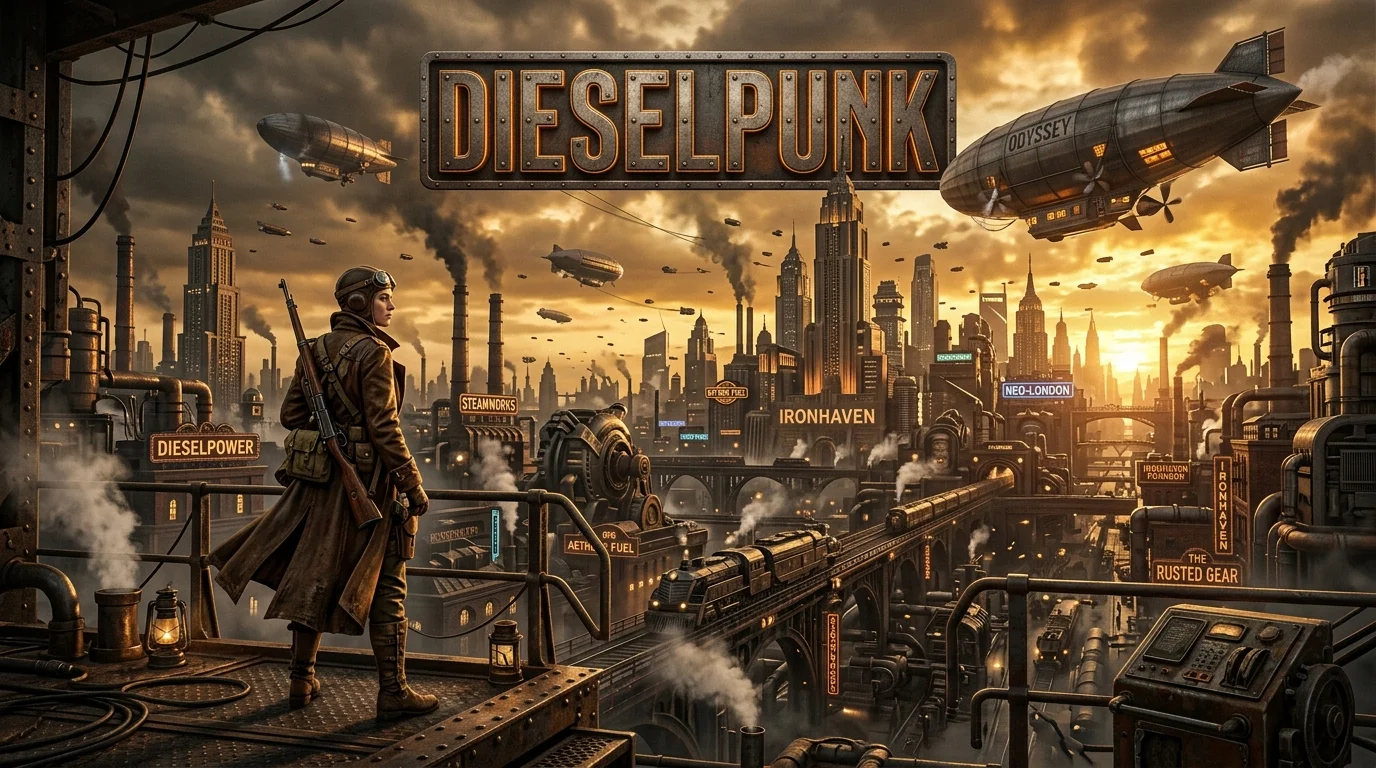
Dieselpunk is one of the most visually striking and imaginative genres in modern pop culture. Combining the industrial power of the early twentieth century with futuristic inventions and alternate-history storytelling, dieselpunk creates worlds where giant airships soar through the skies, towering Art Deco cities dominate the horizon, and advanced technology exists alongside vintage machinery.
For many fans, dieselpunk offers something unique. It presents a future imagined through the eyes of people living during the machine age. Instead of sleek digital technology and minimalist designs, dieselpunk celebrates roaring engines, mechanical innovation, aviation pioneers, and the bold optimism of an era that believed technology could reshape the world.
From films and video games to literature and artwork, dieselpunk continues to inspire creators across multiple industries. Its distinctive aesthetic and fascinating blend of history and imagination have helped it become one of the most recognizable retrofuturistic genres.
What Is This Retro-Futuristic Genre?
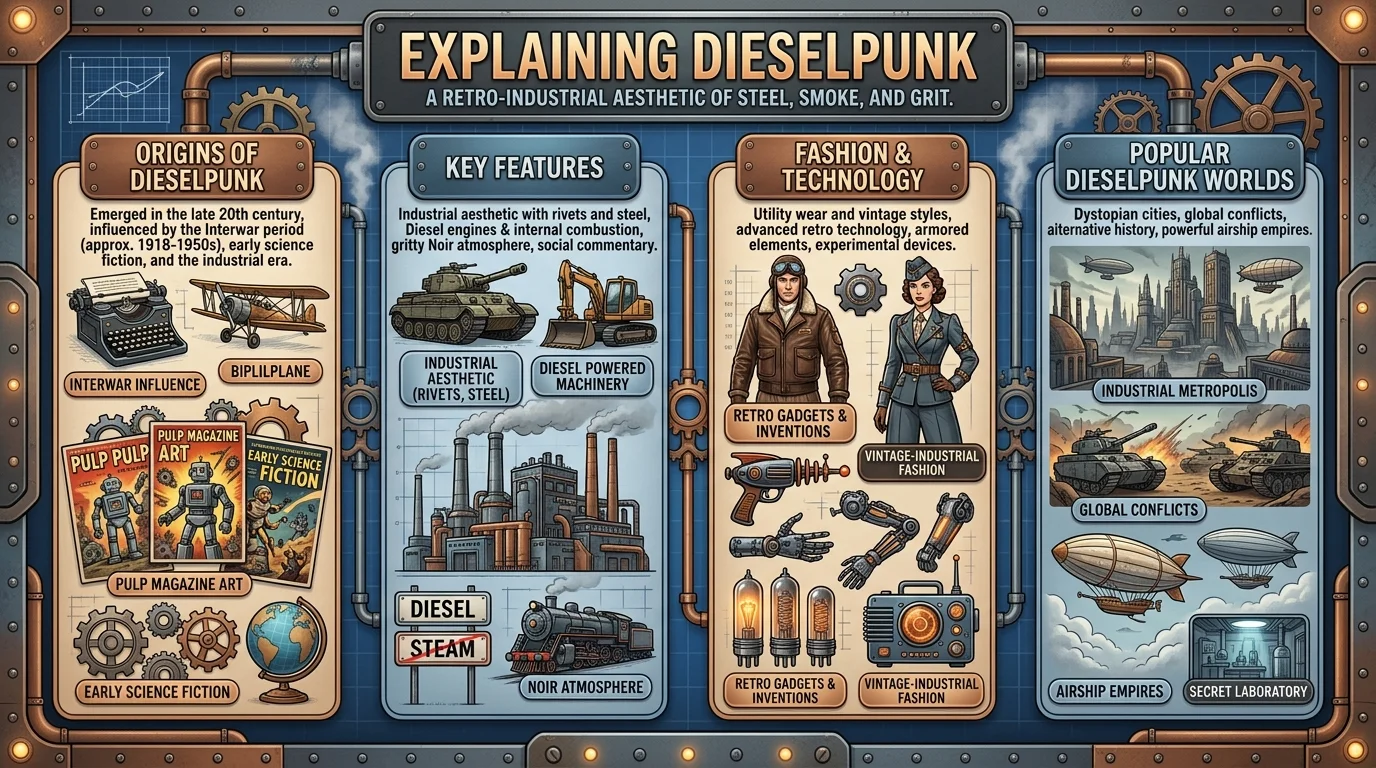
Dieselpunk is a retrofuturistic genre inspired by the cultural, technological, and artistic influences of the period between World War I and the early Cold War, roughly spanning the 1920s through the 1950s.
The genre imagines alternate versions of history where technology developed differently from real-world events. In these worlds, advanced machines, giant aircraft, mechanical robots, and futuristic inventions coexist with the architecture, fashion, and social atmosphere of the diesel age.
At its core, dieselpunk asks an intriguing question:
What would the future look like if the technological dreams of the 1930s and 1940s had become reality?
The answer is often a world filled with industrial power, elegant Art Deco design, daring adventure, and groundbreaking inventions.
The Origins of the Genre
How the Genre Got Its Name
The term “dieselpunk” was introduced in 2001 by game designer Lewis Pollak while discussing his tabletop role-playing game Children of the Sun.
Although the aesthetic and storytelling elements associated with dieselpunk had existed for decades, the genre did not have a formal name until the early 2000s. Once the term appeared, fans quickly embraced it as a way to describe works that blended machine-age technology with speculative fiction.
The name follows a pattern seen in other genres such as cyberpunk and steampunk.
The word “diesel” references the technological era dominated by diesel engines, industrial machinery, and early aviation. The word “punk” reflects the genre’s tendency to reinterpret history, challenge traditional narratives, and explore alternative possibilities.
Historical Inspiration
The period between World War I and World War II serves as the primary source of inspiration for dieselpunk.
This era witnessed dramatic technological advances, including:
- Commercial aviation
- Military aircraft development
- Radio communication
- Industrial manufacturing
- Automotive innovation
- Art Deco architecture
- Early computing concepts
The rapid pace of change during these decades inspired people to imagine incredible futures. Dieselpunk captures those dreams and transforms them into immersive fictional worlds.
Key Characteristics of the Genre
Art Deco Architecture
One of the defining visual features of dieselpunk is Art Deco design.
Art Deco emerged during the 1920s and became known for its geometric patterns, symmetrical structures, metallic finishes, and modern appearance.
In dieselpunk settings, cities often feature:
- Massive skyscrapers
- Decorative geometric designs
- Grand transportation hubs
- Monumental government buildings
- Futuristic urban landscapes
These structures help create the distinctive retro-futuristic atmosphere that fans instantly recognize.
Advanced Mechanical Technology
Technology in dieselpunk worlds is often both familiar and fantastical.
Instead of modern computers and smartphones, dieselpunk societies rely on powerful mechanical inventions and analog technology.
Common examples include:
- Giant airships
- Flying battleships
- Diesel-powered robots
- Experimental aircraft
- Mechanical exoskeletons
- Massive trains
- Advanced military vehicles
- Vacuum tube computers
These machines are often larger, louder, and more visually impressive than their real-world counterparts.
Industrial Aesthetics
Unlike many futuristic genres that hide technology behind sleek surfaces, dieselpunk proudly displays machinery.
Pipes, gears, engines, turbines, and mechanical components are often visible throughout vehicles and buildings.
This emphasis on industrial design gives dieselpunk a sense of power and realism that appeals to many fans.
The Role of Alternate History
Alternate history is a major component of dieselpunk storytelling.
Rather than recreating historical events exactly as they happened, creators explore what might have occurred if key moments unfolded differently.
For example:
- What if advanced robotics had been invented in the 1930s?
- What if giant airships became the dominant form of transportation?
- What if scientific discoveries accelerated technological development by decades?
- What if certain wars ended differently?
These speculative scenarios allow writers and artists to create rich fictional worlds while maintaining a connection to recognizable history.
Dieselpunk vs Steampunk
Many people confuse dieselpunk with steampunk because both belong to the retrofuturism genre.
However, there are significant differences between them.
Historical Period
Steampunk is inspired by the Victorian era and the late nineteenth century.
Dieselpunk is inspired by the machine age of the early twentieth century, particularly the 1920s through the 1950s.
Technology
Steampunk technology revolves around:
- Steam engines
- Clockwork machinery
- Brass mechanisms
- Victorian inventions
Dieselpunk technology focuses on:
- Diesel engines
- Aviation
- Industrial machinery
- Advanced military equipment
- Early electronics
Visual Style
Steampunk often features ornate decorations, brass fittings, and Victorian fashion.
Dieselpunk emphasizes streamlined designs, Art Deco architecture, industrial materials, and military-inspired aesthetics.
Themes
Steampunk frequently focuses on exploration and invention.
Dieselpunk often explores themes such as:
- Industrial progress
- Warfare
- Political intrigue
- Technological advancement
- Social change
Common Themes Found in Dieselpunk
Technology and Progress
Many dieselpunk stories examine humanity’s relationship with technological innovation.
Characters often struggle to balance progress with ethical concerns.
These stories ask whether technological advancement always leads to a better future or whether it can create new problems.
War and Conflict
Because the genre draws heavily from the first half of the twentieth century, military themes frequently appear.
Advanced aircraft, experimental weapons, espionage, and geopolitical tensions are common narrative elements.
However, dieselpunk does not always glorify conflict. Many stories use these settings to explore the human cost of war.
Adventure and Exploration
Not every dieselpunk story focuses on darkness and conflict.
Many embrace the adventurous spirit of classic pulp fiction.
Heroes might:
- Explore hidden civilizations
- Search for lost technologies
- Travel aboard massive airships
- Uncover ancient mysteries
- Fight dangerous villains
This adventurous tone remains one of the genre’s most appealing qualities.
Human Versus Machine
As technology becomes more advanced, questions about humanity often emerge.
Stories may explore:
- Artificial intelligence
- Mechanical augmentation
- Automation
- Scientific ethics
These themes remain relevant even in contemporary discussions about technology.
Fashion and Style in the Diesel Age
Fashion plays a significant role in establishing the genre’s visual identity.
Common clothing styles include:
- Military uniforms
- Leather jackets
- Aviator goggles
- Flight suits
- Tailored suits
- Long trench coats
- Utility belts
- Workwear inspired by industrial labor
Many outfits combine practical functionality with elegant Art Deco influences.
The result is a distinctive style that feels both historical and futuristic.
Famous Dieselpunk Movies
Several films showcase dieselpunk aesthetics and themes.
Sky Captain and the World of Tomorrow
Often considered one of the clearest examples of dieselpunk cinema, this film features giant robots, futuristic aircraft, and a visually stunning retro-futuristic world.
The Rocketeer
Set in an alternate version of the late 1930s, the movie combines aviation adventure with advanced technology and classic pulp storytelling.
Metropolis
Although created before the term dieselpunk existed, Fritz Lang’s Metropolis strongly influenced many visual elements associated with the genre.
Captain America: The First Avenger
Certain aspects of the film’s alternate World War II technology align closely with dieselpunk aesthetics.
Retro-Futuristic Games Inspired by the Genre
Video games have become one of the most popular mediums for dieselpunk storytelling.
Iron Harvest
Inspired by alternate-history warfare, Iron Harvest features giant diesel-powered mechs and industrial battlefields.
Crimson Skies
This classic game explores a world dominated by aerial piracy, advanced aircraft, and airborne adventure.
Wolfenstein Series
Many entries in the franchise incorporate alternate-history technology and industrial aesthetics associated with dieselpunk.
Bioshock
While not purely dieselpunk, parts of its visual style and historical influences overlap with the genre.
Why This Retro-Futuristic Style Remains Popular
A Unique Visual Identity
Few genres are as instantly recognizable.
The combination of:
- Art Deco design
- Massive machinery
- Vintage aviation
- Industrial technology
- Alternate history
creates an unforgettable aesthetic.
Nostalgia for a Different Future
Dieselpunk allows people to experience the future as previous generations imagined it.
Rather than focusing on digital technology, it celebrates mechanical innovation and industrial ambition.
This perspective offers a refreshing alternative to modern science fiction.
Endless Creative Possibilities
Because dieselpunk combines history and imagination, creators enjoy enormous freedom.
They can reimagine historical events, invent new technologies, and build entirely original worlds while maintaining a recognizable foundation.
Influence on Modern Culture
Dieselpunk has expanded beyond books, movies, and games.
Today, its influence appears in:
- Fashion design
- Architecture
- Graphic design
- Cosplay
- Digital art
- Tabletop gaming
Artists continue to reinterpret dieselpunk concepts for contemporary audiences, ensuring the genre remains relevant and visually exciting.
Frequently Asked Questions
What Does This Genre Mean?
Dieselpunk is a retrofuturistic genre that combines the aesthetics and technology of the diesel era with futuristic inventions, alternate history, and speculative storytelling. It typically draws inspiration from the period between the 1920s and 1950s.
Is dieselpunk science fiction?
Yes. Dieselpunk is considered a subgenre of science fiction because it imagines advanced technologies, alternate timelines, and futuristic possibilities beyond historical reality.
How Does This Genre Differ from Steampunk?
Steampunk focuses on Victorian-era steam technology, while dieselpunk centers on industrial machinery, aviation, and early twentieth-century aesthetics associated with the diesel age.
What Are Some Popular Examples?
Popular examples include Sky Captain and the World of Tomorrow, The Rocketeer, Iron Harvest, Crimson Skies, and various alternate-history novels and comics.
Why do people like dieselpunk?
Many people enjoy dieselpunk because it combines historical inspiration with imaginative technology, creating visually rich worlds filled with adventure, innovation, and unique storytelling opportunities.
Conclusion
Dieselpunk offers a fascinating blend of history, imagination, and technological wonder. By combining the industrial power of the early twentieth century with futuristic inventions and alternate-history concepts, the genre creates worlds unlike anything else in science fiction.
Whether experienced through films, games, books, or artwork, dieselpunk continues to captivate audiences with its distinctive aesthetics, adventurous spirit, and thought-provoking themes. Its celebration of mechanical innovation and retro-futuristic design ensures that it remains a vibrant and influential genre for creators and fans alike.