
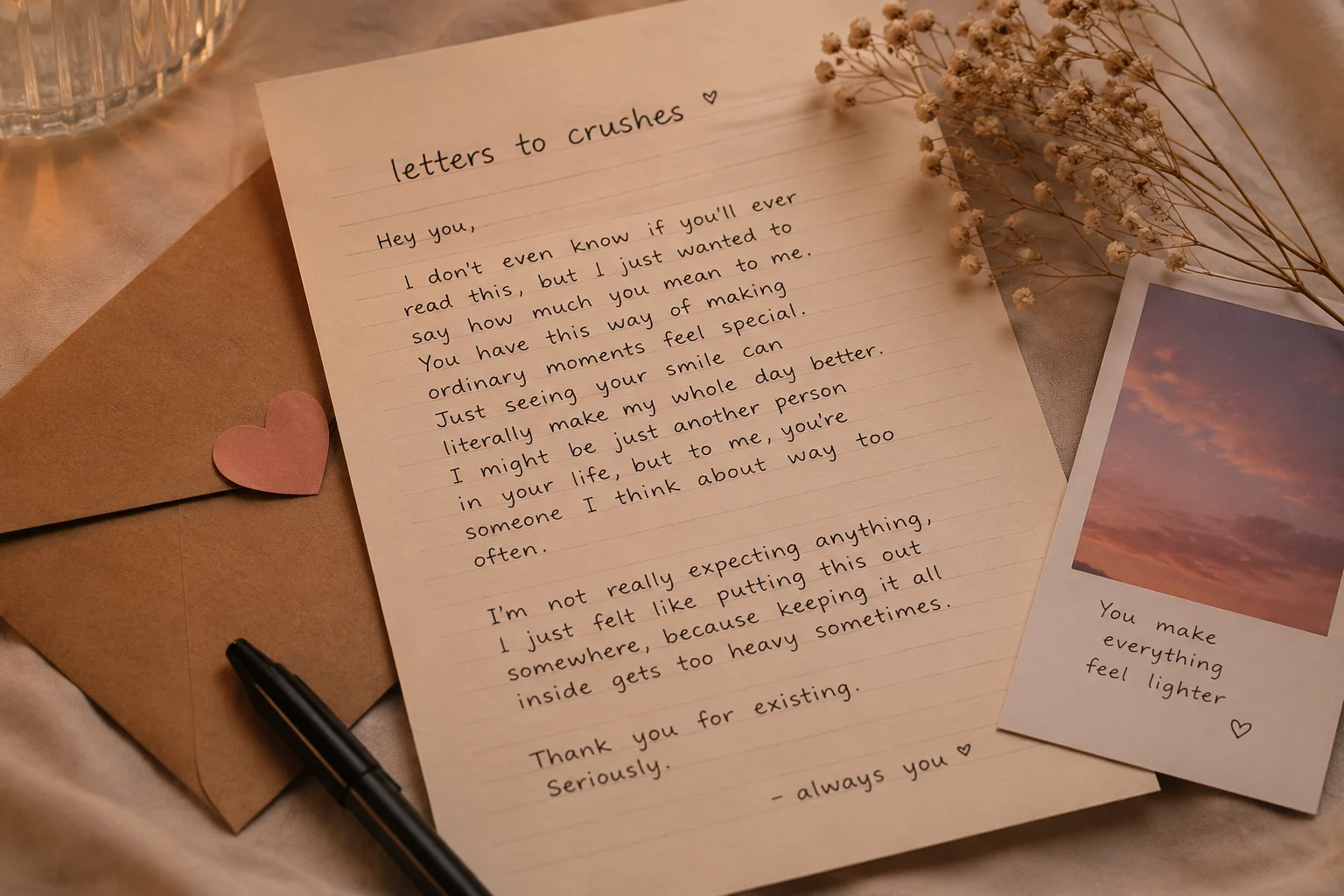
Few things feel as exciting and nerve-wracking as writing a Letters to Crushes someone you have a crush on. Whether you’re trying to confess your feelings, express admiration, or simply make a memorable impression, a thoughtful letter can communicate emotions that are often difficult to say out loud.
In an age dominated by texts, direct messages, and social media, handwritten or carefully written letters feel more personal than ever. They allow you to slow down, choose your words thoughtfully, and share your feelings in a sincere way. A well-written letter doesn’t need dramatic declarations or poetic language. What matters most is honesty, authenticity, and respect.
This guide explores everything you need to know about writing letters to crushes, including why they work, what to include, common mistakes to avoid, and several examples you can use as inspiration.
Why Letters to Crushes Still Matter
A Personal Form of Communication
Modern communication is often fast and brief. Messages are sent in seconds and forgotten just as quickly. A letter feels different because it requires effort and intention.
When someone receives a thoughtful letter, they recognize that time and care went into writing it. This effort alone can make the message feel meaningful.
Unlike a casual text, a letter creates a lasting memory that can be read again and again.
Expressing Feelings More Clearly Letters to Crushes
Many people struggle to express emotions face-to-face.
Nervousness can make it difficult to find the right words when talking to a crush. Writing allows you to organize your thoughts and communicate clearly without the pressure of an immediate response.
A letter gives you the opportunity to express feelings thoughtfully while avoiding misunderstandings.
Creating a Genuine Connection Letters to Crushes
A sincere letter can help build emotional connection.
Rather than focusing on appearance alone, letters often highlight personality traits, shared experiences, and qualities that make the other person special.
This deeper level of communication often feels more meaningful than generic compliments.
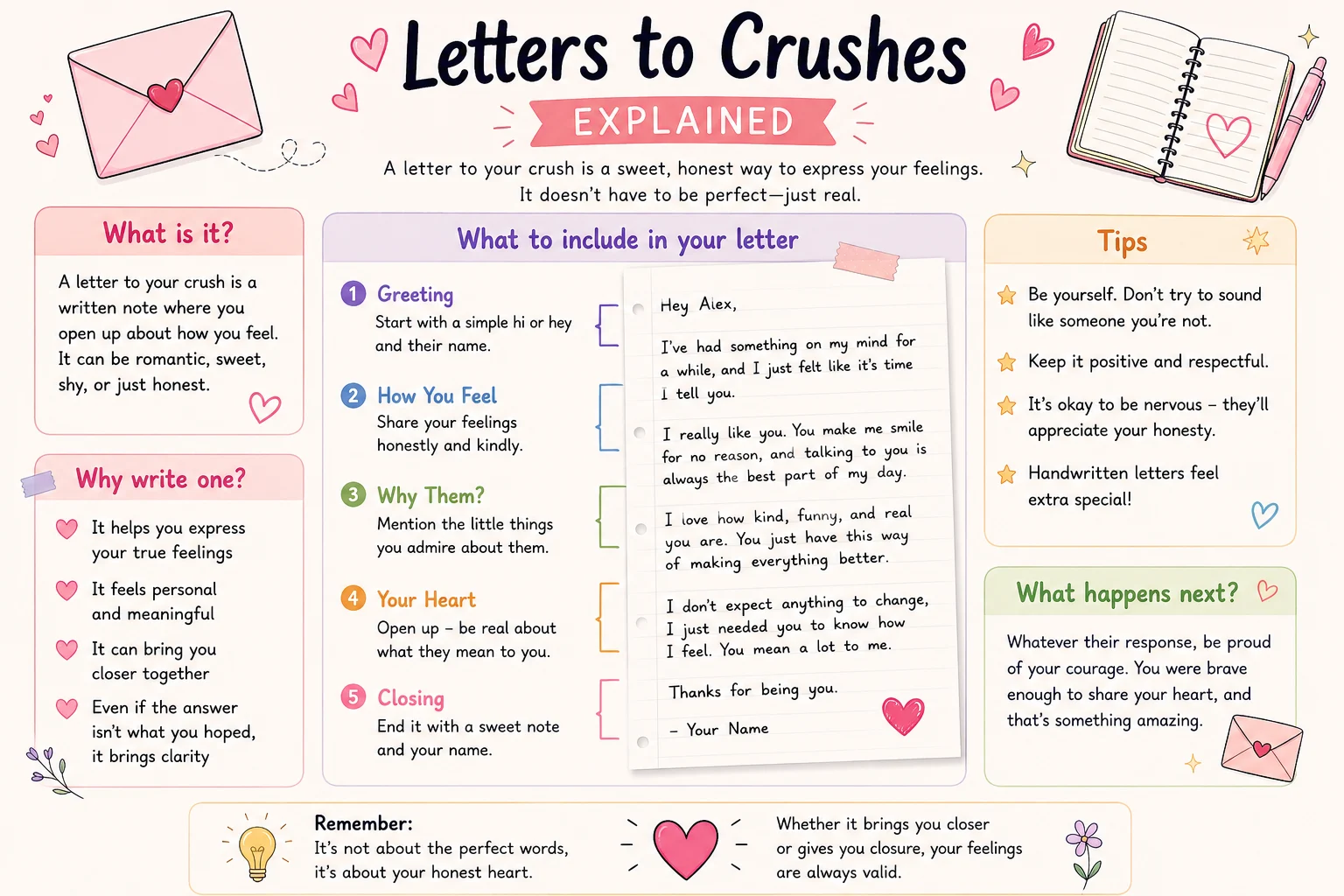
What to Include in a Letters to Crushes
Start with a Friendly Greeting
The opening should feel natural and comfortable.
You don’t need an overly dramatic introduction. A simple greeting helps set a warm and approachable tone.
Examples include:
- Hi [Name],
- Hey [Name],
- Dear [Name],
The goal is to sound like yourself rather than trying to impress with complicated language.
Share Why You’re Writing Letters to Crushes
Early in the letter, explain your purpose.
You might want to:
- Express admiration
- Share feelings
- Thank them for something
- Get to know them better
- Compliment their personality
Being clear helps the reader understand your intentions.
Honesty is often more effective than trying to be mysterious.
Mention Specific Qualities
Generic compliments can feel forgettable.
Instead of saying someone is “nice,” explain what makes them stand out.
For example:
- Their sense of humor
- Their kindness
- Their confidence
- Their intelligence
- Their positivity
Specific observations feel more genuine and memorable.
End Respectfully
The closing should leave the recipient feeling comfortable.
Avoid putting pressure on them to respond a certain way.
A respectful ending shows emotional maturity and confidence.
Examples include:
- Take care,
- Best wishes,
- Looking forward to seeing you,
- Sincerely,
Different Types of Letters to Crushes
A Simple Admiration Letter
Sometimes you simply want someone to know they are appreciated.
These letters focus on positive qualities without making overwhelming romantic declarations.
Example:
“Hi Sarah,
I wanted to tell you something I’ve been thinking about for a while. One thing I admire about you is how kind you are to everyone around you. You always seem to know how to make people feel welcome and comfortable.
I don’t know if I’ve ever said it directly, but I really appreciate that about you. It makes a bigger difference than you probably realize.
I hope you have an amazing week.
Take care.”
This type of letter feels sincere without creating unnecessary pressure.
A Friendship-to-Crush Letter
Sometimes feelings develop after friendship.
In this situation, honesty and respect are especially important.
Example:
“Hey Alex,
We’ve known each other for quite a while now, and our friendship has become something I genuinely value.
Recently, I’ve realized that my feelings may be stronger than friendship. I wanted to be honest because I respect you and didn’t want to keep pretending otherwise.
No matter how you feel, I appreciate having you in my life and hope we can continue treating each other with kindness and respect.
Thank you for reading this.”
This approach balances honesty with emotional maturity.
A Cute and Playful Letter
Not every letter needs to be serious.
Playfulness can help reduce tension and create a positive impression.
Example:
“Hi Emma,
I have a confession.
You have become one of my favorite distractions.
Every time I tell myself I’ll focus on something important, somehow I end up thinking about our conversations instead.
I’m starting to suspect this is entirely your fault.
Anyway, I just wanted you to know that talking with you always makes my day better.
Have a great day.”
Lighthearted letters often feel charming and approachable.
Tips for Writing a Great Letter
Be Yourself
The best letters sound authentic.
Avoid copying movie dialogue or trying to sound like someone you’re not.
Your crush is more likely to appreciate genuine words than exaggerated romance.
Write the way you naturally speak.
Focus on Feelings, Not Fantasy Letters to Crushes
It’s easy to idealize a crush.
However, effective letters focus on real experiences and genuine observations rather than unrealistic fantasies.
Talk about what you actually appreciate about the person.
Authenticity creates stronger emotional impact.
Keep It Clear and Concise Letters to Crushes
Long letters are not always better.
A concise message often feels more sincere because every sentence serves a purpose.
Avoid repeating the same point multiple times.
Quality matters more than length.
Respect Their Response Letters to Crushes
Every letter involves vulnerability.
Your crush may share your feelings, need time to think, or feel differently.
A respectful letter leaves room for any response.
Confidence comes from expressing yourself honestly, not from controlling the outcome.
Common Mistakes to Avoid Letters to Crushes
Being Overly Intense
Declaring lifelong love to someone you barely know can feel overwhelming.
Keep your message appropriate to the stage of your relationship.
Strong emotions are fine, but balance is important.
Using Generic Compliments Letters to Crushes
Statements like “You’re perfect” often feel less meaningful than specific observations.
Personal details demonstrate genuine attention and appreciation.
Specificity makes a letter stand out.
Creating Pressure Letters to Crushes
Avoid phrases that demand a particular response.
Examples include:
- “You have to give me a chance.”
- “Please don’t reject me.”
- “I need an answer immediately.”
Healthy communication respects the other person’s feelings and choices.
Overthinking Every Word Letters to Crushes
Perfection is not necessary.
Most people remember how a letter made them feel rather than analyzing every sentence.
Sincerity usually matters more than flawless writing.
Should You Send the Letter?
Many people hesitate before sharing their feelings.
There is no universal answer, but consider asking yourself:
- Are your feelings genuine?
- Are you prepared for any response?
- Is the message respectful?
- Does it reflect your true personality?
If the answer is yes, sending the letter may provide clarity and emotional relief.
Even if the outcome isn’t what you hoped for, expressing yourself honestly can be a positive experience.
Modern Alternatives to Traditional Letters
While handwritten notes remain special, letters can also be shared through:
- Text messages
- Direct messages
- Digital cards
- Private social media messages
The format matters less than the sincerity behind the message.
Many people appreciate thoughtful words regardless of how they are delivered.
Frequently Asked Questions
Q: What should I write in a letter to my crush?
A: Focus on genuine feelings, specific qualities you admire, and honest communication. Keep the message respectful, personal, and clear. Mention what makes the person special and explain why you wanted to write to them.
Q: Should I confess my feelings in a letter?
A: If you’re comfortable being honest and prepared for any response, a letter can be a thoughtful way to express your feelings. Writing often helps communicate emotions more clearly than spontaneous conversations.
Q: How long should a letter to a crush be?
A: Most effective letters are concise and meaningful. A few well-written paragraphs are often more impactful than several pages of repeated thoughts. Focus on quality rather than length.
Q: Is a handwritten letter better than a text?
A: Handwritten letters often feel more personal because they require extra effort. However, sincere words can be meaningful in any format, including texts, emails, and digital messages.
Q: What if my crush doesn’t feel the same way?
A: Rejection can be disappointing, but expressing your feelings honestly is still valuable. Respect their response, maintain your self-respect, and remember that vulnerability is a sign of courage rather than failure.
Conclusion
Letters to crushes remain one of the most personal and meaningful ways to express affection. They allow you to communicate emotions thoughtfully, highlight what you genuinely appreciate about someone, and create a memorable connection that goes beyond everyday conversation.
The most effective letters are not necessarily the most romantic or poetic. They are the most honest. By focusing on authenticity, respect, and genuine appreciation, you can create a message that feels heartfelt and memorable. Whether you choose to send your letter or simply use it as a way to organize your thoughts, the act of expressing yourself honestly is often worthwhile in itself.