
Splatterpunk is one of the most controversial and misunderstood subgenres in horror literature. Known for its graphic violence, transgressive themes, and refusal to follow traditional horror conventions, splatterpunk emerged in the 1980s as a rebellious movement that pushed the boundaries of what horror fiction could depict. Rather than relying solely on suspense, implication, or psychological dread, splatterpunk confronts readers with explicit imagery and uncomfortable realities.
Although often associated with gore and shock value, splatterpunk is more than graphic violence. At its core, the movement challenged established horror norms and reflected the social anxieties, countercultural attitudes, and artistic experimentation of its era. Today, its influence can be seen across horror novels, films, comics, and the growing extreme horror movement.
This guide explores the history, characteristics, notable creators, and lasting legacy of splatterpunk, helping readers understand why the genre continues to attract both passionate fans and outspoken critics.
What Is This Horror Subgenre?
Splatterpunk is a horror fiction movement that emerged during the 1980s and became known for its graphic depictions of violence, explicit content, and boundary-pushing storytelling. The genre is frequently described as “hyperintensive horror with no limits” and is often viewed as a reaction against more traditional forms of horror that relied on suggestion and restraint.
Unlike classic horror, which often leaves terrifying details to the reader’s imagination, splatterpunk tends to place those details directly on the page. Physical horror, bodily destruction, and shocking imagery frequently play a central role in the narrative.
However, reducing splatterpunk to gore alone misses a significant part of its identity. Many early works also explored social rebellion, outsider culture, political frustration, and themes that mainstream fiction often avoided.
The Origins of the Movement
Who Coined the Term?
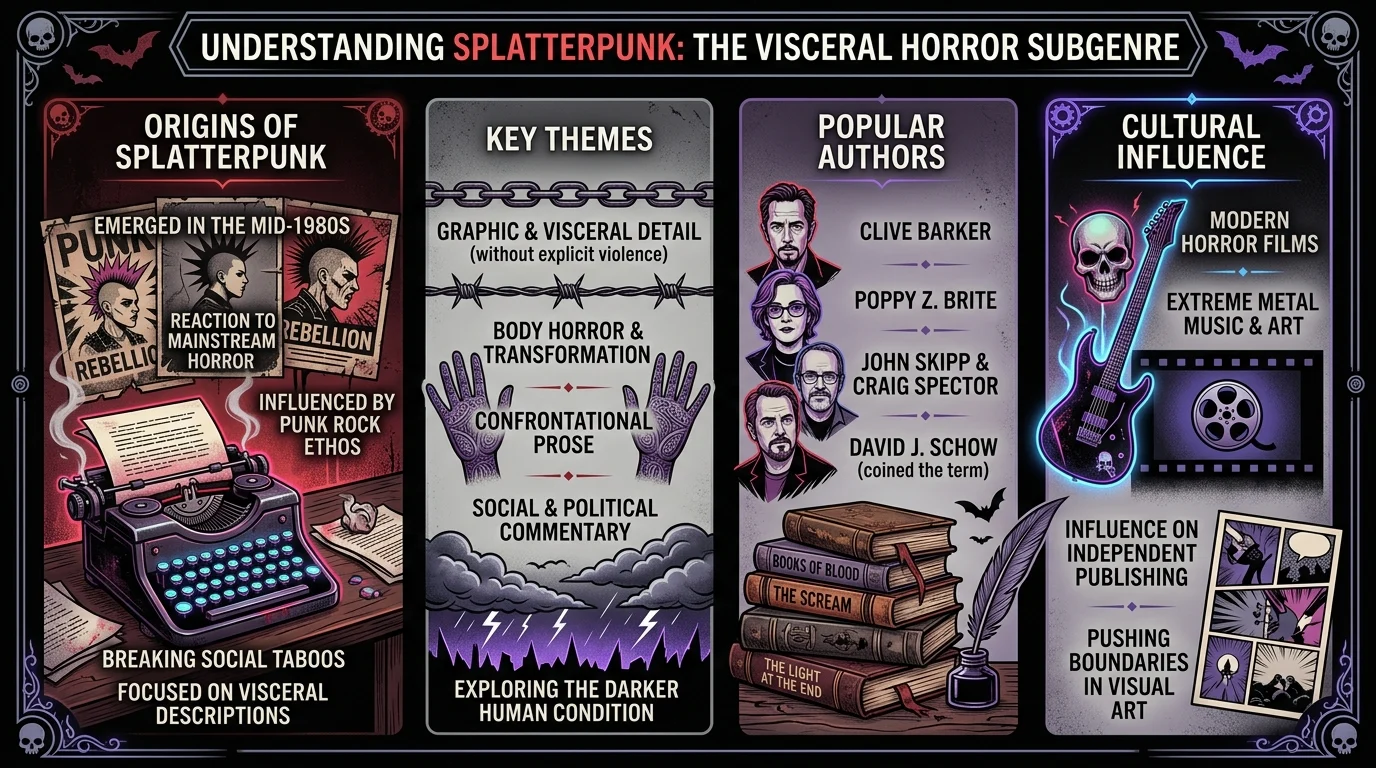
The term “splatterpunk” was coined by horror writer David J. Schow in 1986 during the Twelfth World Fantasy Convention in Providence, Rhode Island. Schow used the term to describe a new wave of horror fiction that rejected traditional limitations and embraced a more aggressive, confrontational style.
The word combines “splatter,” referencing graphic violence, with “punk,” reflecting the movement’s rebellious and anti-establishment attitude. The name perfectly captured the spirit of a genre that sought to challenge both literary conventions and reader expectations.
The Horror Landscape of the 1980s
To understand why splatterpunk emerged, it helps to look at horror fiction during the 1980s.
Many horror novels of the time focused on suspense, supernatural mysteries, and gradual psychological tension. While these stories remained popular, some writers felt the genre had become predictable and overly restrained.
A new generation of authors wanted horror that felt more immediate, raw, and uncompromising. Their stories embraced graphic imagery, darker subject matter, and a willingness to confront uncomfortable realities.
Early Influences
Although the movement formally began in the 1980s, several earlier works influenced its development.
Michael Shea’s short story The Autopsy (1980) is frequently described as a proto-splatterpunk work because of its graphic body horror and intense imagery. Critics and historians often point to such stories as precursors to the movement that would soon emerge.
Other influences included transgressive fiction, punk culture, exploitation cinema, and the increasingly graphic horror films of the late twentieth century.
Defining Characteristics of the Genre
Graphic Violence
The most recognizable feature of splatterpunk is its explicit depiction of violence.
Rather than implying horrific events, authors often describe them in vivid detail. These scenes are intended to shock, disturb, and provoke strong emotional reactions from readers.
The violence is not always included simply for entertainment. In many works, graphic imagery serves as a tool for exploring deeper themes related to fear, power, morality, and human nature.
Transgressive Themes
Splatterpunk frequently explores subjects that mainstream fiction avoids.
Stories often challenge social norms, confront taboos, and examine uncomfortable aspects of society. Themes may include alienation, corruption, addiction, rebellion, and moral decay.
This willingness to address difficult topics contributed to the genre’s reputation as a countercultural movement rather than merely a style of horror writing.
Countercultural Attitude
The “punk” element of splatterpunk is just as important as the violence.
Many early writers saw themselves as outsiders pushing back against established literary traditions. Their stories often featured unconventional protagonists, anti-authoritarian themes, and critiques of social institutions.
This rebellious spirit helped distinguish the movement from traditional horror fiction.
Emotional Intensity
While graphic imagery attracts attention, emotional intensity remains a defining feature.
Splatterpunk aims to provoke strong reactions, whether fear, disgust, anger, sadness, or shock. Readers are rarely allowed to remain emotionally detached from the events unfolding in the story.
The result is a reading experience that can feel far more immediate and confrontational than conventional horror.
Extreme Horror vs Traditional Horror
Traditional horror often relies on atmosphere, suspense, and psychological tension.
Classic authors such as Shirley Jackson and M.R. James created fear through implication and uncertainty. Readers were encouraged to imagine what lurked beyond the shadows.
Splatterpunk takes a different approach.
Instead of asking readers to imagine the horror, it often presents the horror directly. Violence becomes visible rather than implied, and emotional discomfort is frequently amplified through explicit detail.
Neither approach is inherently superior. They simply represent different methods of achieving horror.
How It Differs From Extreme Horror
Many readers use splatterpunk and extreme horror interchangeably, but some horror fans and scholars distinguish between the two.
Splatterpunk originally referred to a specific literary movement that emerged during the 1980s. It combined graphic content with countercultural themes and a desire to challenge horror conventions.
Extreme horror developed later and often focuses primarily on pushing boundaries through increasingly disturbing content. While the two categories overlap significantly, some fans argue that splatterpunk emphasizes rebellion and artistic intent, whereas extreme horror prioritizes intensity and shock.
The distinction remains debated, and many modern works are associated with both labels.
Influential Splatterpunk Authors
David J. Schow
David J. Schow is often called the father of splatterpunk because he coined the term and helped define the movement’s identity. His fiction and screenwriting work played a major role in establishing the genre’s reputation.
Clive Barker
Clive Barker became one of the most influential voices associated with splatterpunk. His Books of Blood collection demonstrated how graphic horror could coexist with literary ambition, imagination, and emotional depth.
John Skipp and Craig Spector
Often viewed as key figures in the movement, John Skipp and Craig Spector wrote novels that combined punk sensibilities with graphic horror and social commentary. Their work helped define the genre during its formative years.
Poppy Z. Brite
Poppy Z. Brite brought a distinctive voice to splatterpunk by blending extreme imagery with gothic atmosphere, identity exploration, and lyrical prose. The result expanded the genre’s artistic possibilities.
Notable Splatterpunk Books
Several books are frequently recommended as introductions to the genre.
These include:
- Books of Blood by Clive Barker
- The Kill Riff by David J. Schow
- The Light at the End by John Skipp and Craig Spector
- Lost Souls by Poppy Z. Brite
- Off Season by Jack Ketchum
These works demonstrate the range of approaches found within splatterpunk, from supernatural horror to social commentary and psychological terror.
Why Splatterpunk Remains Relevant
Challenging Creative Boundaries
Splatterpunk continues to attract writers who want to explore subjects that mainstream fiction often avoids.
Its emphasis on creative freedom allows authors to experiment with structure, themes, and content without strict genre limitations.
Influence on Modern Horror
Modern horror literature owes a significant debt to splatterpunk.
Many contemporary horror writers incorporate elements that became popular through the movement, including graphic body horror, transgressive themes, and emotionally intense storytelling.
A Dedicated Fan Community
Despite remaining a niche genre, splatterpunk has developed a loyal fan base.
Events such as the Splatterpunk Awards, established by KillerCon in 2018, demonstrate the continued interest in both classic and modern works associated with the genre.
Criticism and Controversy
Splatterpunk has faced criticism since its inception.
Some critics argue that graphic violence can overwhelm storytelling and reduce horror to shock value. Horror writers including Robert Bloch questioned whether excessive gore created terror or simply disgust.
Supporters counter that the genre’s purpose is not comfort. They argue that confronting disturbing realities through fiction can create powerful artistic experiences and challenge readers to engage with difficult themes.
The debate surrounding splatterpunk remains part of what makes the genre culturally significant.
Frequently Asked Questions
Q: What is splatterpunk?
A: Splatterpunk is a horror fiction movement that emerged during the 1980s. It is characterized by graphic violence, transgressive themes, emotional intensity, and a rebellious approach to traditional horror storytelling.
Q: Who created the term splatterpunk?
A: Horror writer David J. Schow coined the term in 1986 during the Twelfth World Fantasy Convention in Providence, Rhode Island.
Q: Is splatterpunk the same as extreme horror?
A: Not exactly. Splatterpunk began as a specific literary movement with countercultural roots, while extreme horror is often viewed as a broader category focused on pushing boundaries through disturbing content. Many works overlap both genres.
Q: What are the best splatterpunk books for beginners?
A: Many readers start with Clive Barker’s Books of Blood, David J. Schow’s The Kill Riff, and The Light at the End by John Skipp and Craig Spector.
Q: Why is splatterpunk controversial?
A: The genre’s graphic depictions of violence and willingness to explore taboo subjects have sparked debate among readers and critics since the 1980s. Some see it as groundbreaking horror, while others view it as excessive.
Conclusion
Splatterpunk occupies a unique place in horror history. Emerging as a rebellious response to conventional horror fiction, it challenged literary boundaries through graphic imagery, transgressive themes, and an uncompromising artistic philosophy. While controversy has followed the genre since its inception, its influence on modern horror is undeniable.
Whether viewed as an important literary movement or an extreme form of entertainment, splatterpunk continues to inspire writers and captivate readers who seek horror that refuses to look away from humanity’s darkest fears. Its legacy lives on through contemporary horror fiction, proving that boundary-pushing storytelling still has a place in the genre today.